
Why Succulents Are the Perfect Starting Point
Succulents have become the gateway plant for millions of new plant parents, and it's easy to see why. They're compact, available in endless varieties, and genuinely forgiving of beginner mistakes.
But "easy" doesn't mean "no care needed." Understanding what makes succulents unique will help you keep them alive and thriving for years.
What Makes a Succulent a Succulent?
Succulents are plants that store water in their leaves, stems, or roots. This adaptation allows them to survive in arid environments where most plants would perish. This water storage is what makes them so drought-tolerant — but it also means they have very specific needs.
The Big Three: Light, Water, Soil
Light: Bright and Direct
Unlike most tropical houseplants, many succulents actually enjoy direct sunlight. A south- or west-facing window is ideal.
- Echeveria, aeonium, sedum → Need at least 6 hours of bright light
- Haworthia, gasteria → Prefer bright indirect light
- Aloe vera, jade plant → Adaptable but prefer bright light
Water: Less Is More
The most important rule of succulent care: let the soil dry out completely between waterings.
- Check the soil — stick your finger into the soil. It should be completely dry.
- Water thoroughly — pour water until it runs from the drainage holes.
- Empty the saucer — never let the plant sit in water.
- Wait — in summer, this might mean watering every 1-2 weeks. In winter, every 3-4 weeks.
The soak and dry method is the gold standard. Drench the soil completely, then wait until it's bone dry before watering again.
Soil: Well-Draining Is Non-Negotiable
Standard potting soil retains too much moisture for succulents. Use a specialized succulent and cactus mix, or make your own:
- 50% regular potting soil
- 50% perlite, pumice, or coarse sand
Common Beginner Mistakes
1. Overwatering
This kills more succulents than anything else. Signs of overwatering include mushy, translucent leaves, black stems, and leaves falling off with a gentle touch.
2. Using Pots Without Drainage
Decorative pots without drainage holes are death traps for succulents. Always use a pot with a hole, or place a nursery pot inside the decorative one.
3. Misting
Succulents do not benefit from misting. They prefer dry air. Misting can actually promote fungal growth and rot.
Top 8 Succulents for Beginners
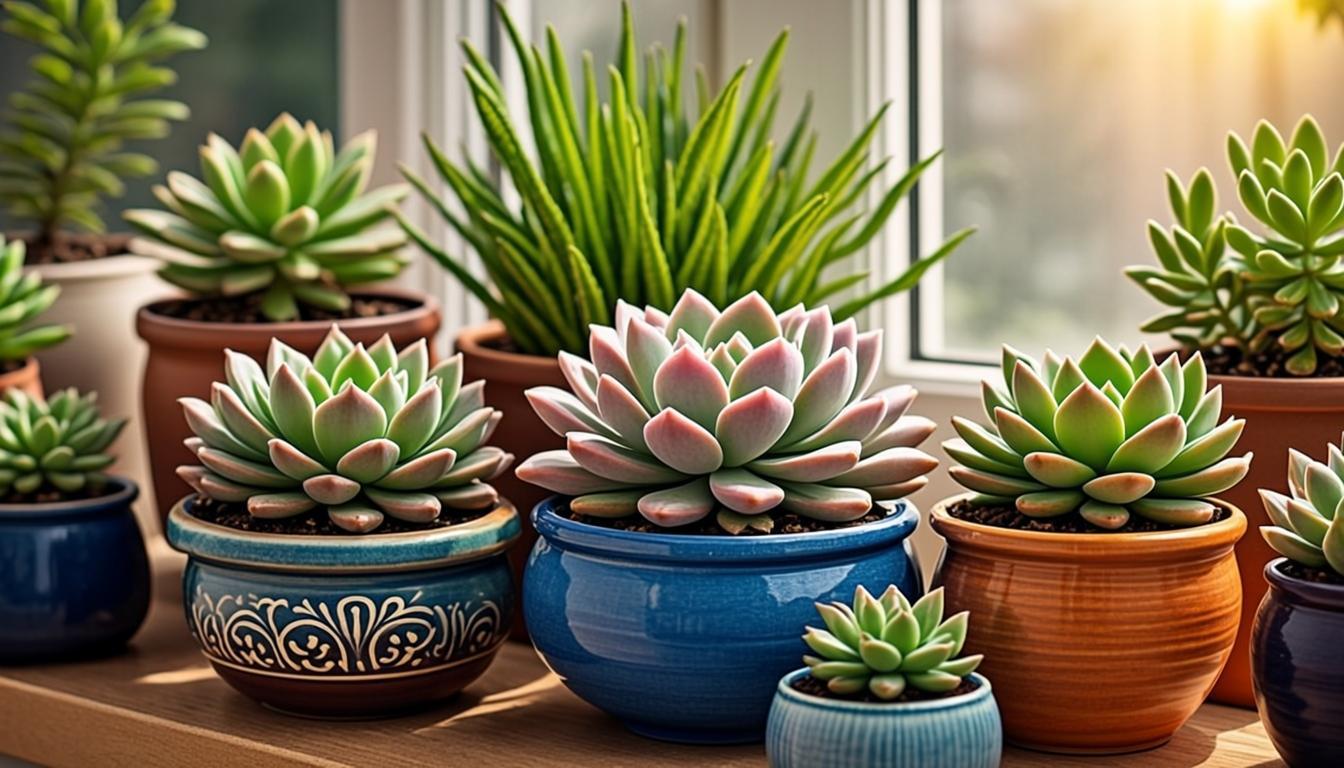
- Echeveria elegans — Perfect rosette shape, easy to propagate
- Haworthia fasciata — Zebra plant, tolerates lower light
- Aloe vera — Practical and beautiful
- Crassula ovata (Jade Plant) — Long-lived and can grow into a small tree
- Sedum morganianum (Burro's Tail) — Beautiful trailing succulent
- Kalanchoe tomentosa (Panda Plant) — Fuzzy, adorable leaves
- Graptopetalum paraguayense — Ghost plant with beautiful color changes
- Senecio rowleyanus (String of Pearls) — Unique trailing form
Propagation
Succulents are among the easiest plants to propagate:
- Leaf propagation: Gently twist a leaf from the stem, let it callous for 2-3 days, then place on moist soil
- Stem cuttings: Cut a stem, let it callous, then place in soil or water
- Offsets/pups: Many succulents produce baby plants that can be separated and potted independently
Succulents reward patience and restraint. Give them plenty of light, water sparingly, and enjoy the meditative process of watching them grow.